Plan your Pangong Lake trip with this guide to the Leh to Pangong route via Chang La and Tangtse, where to stay or camp, sunrise and photography tips, and one- or two-night itineraries.
Pangong Tso is the long, narrow high-altitude lake that changes colour through the day, from pale turquoise to deep blue and slate grey. It stretches from Ladakh into Tibet, and only part of it lies in India. For many travellers it is the highlight of a Ladakh trip. This Pangong Lake travel guide covers the route from Leh, the choice between camps and guesthouses, how to time your visit for sunrise and good photographs, and how to fit the lake into a wider itinerary.
Why Pangong Lake is worth the journey
The appeal of Pangong is simple: a huge sheet of water surrounded by bare, coloured mountains at an altitude where little grows. There is not much to "do" in the usual sense. The experience is about watching the light move across the water, walking along the shore, and spending a cold, quiet night under a clear sky.
The lake sits higher than Leh. Its surface lies at roughly 4,225–4,350 m, depending on the source. That height is the main reason to plan carefully. Visit only after you have spent a couple of nights acclimatising in Leh.
Understanding the lake
Pangong Tso is long and narrow, stretching east from Ladakh into Tibet; only the western part is in India. The lake is about 134 km long, and roughly a third to 40% of its length lies in India. The water is brackish, which is one reason it looks so clear, and in winter the lake freezes over.
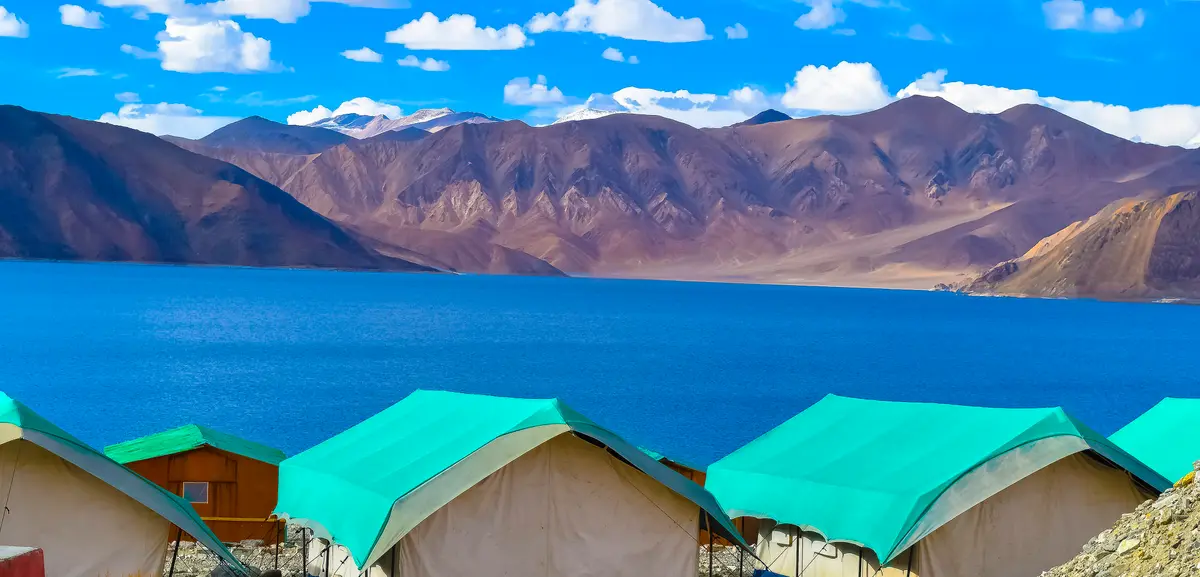
The famous colour changes come from the depth of the water, the angle of the sun and the sky above. On a bright day you might see pale green in the shallows, turquoise further out and deep blue in the middle. When clouds roll in, the whole lake can turn steel grey within minutes – part of what makes an overnight stay worthwhile.
Leh to Pangong route
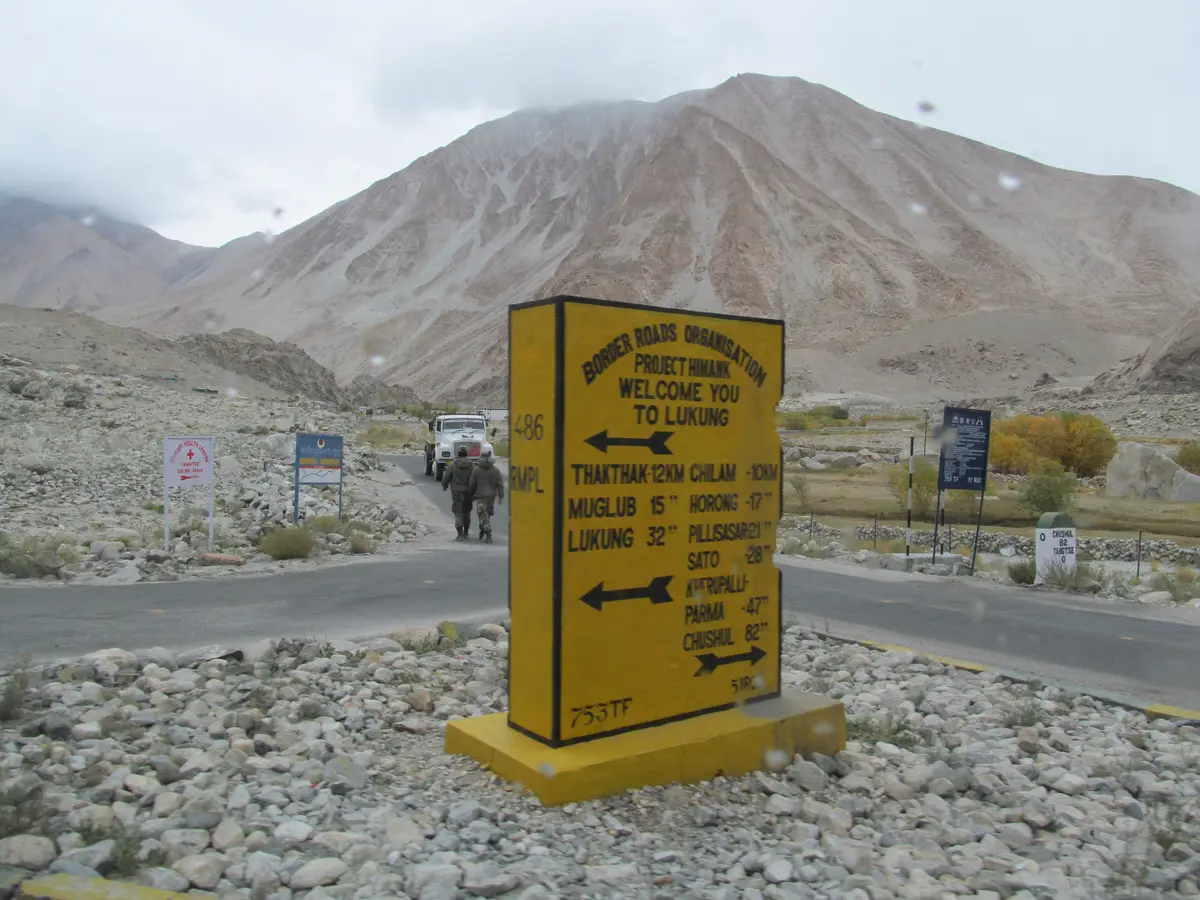
The usual Leh to Pangong route leaves Leh along the Manali highway to Karu, turns towards Sakti, climbs over Chang La, then descends to Durbuk and Tangtse before reaching the lakeshore at Lukung and Spangmik.
- Leh to Karu: along the Indus valley, past Shey and Thiksey.
- Karu to Chang La: a steady climb through Sakti village to the pass.
- Chang La to Tangtse: a long descent to Durbuk and the Tangtse valley, a natural tea stop.
- Tangtse to Lukung and Spangmik: the final stretch alongside streams and marshland to the lake.
The drive is roughly 150–160 km and usually takes 5–7 hours with stops.
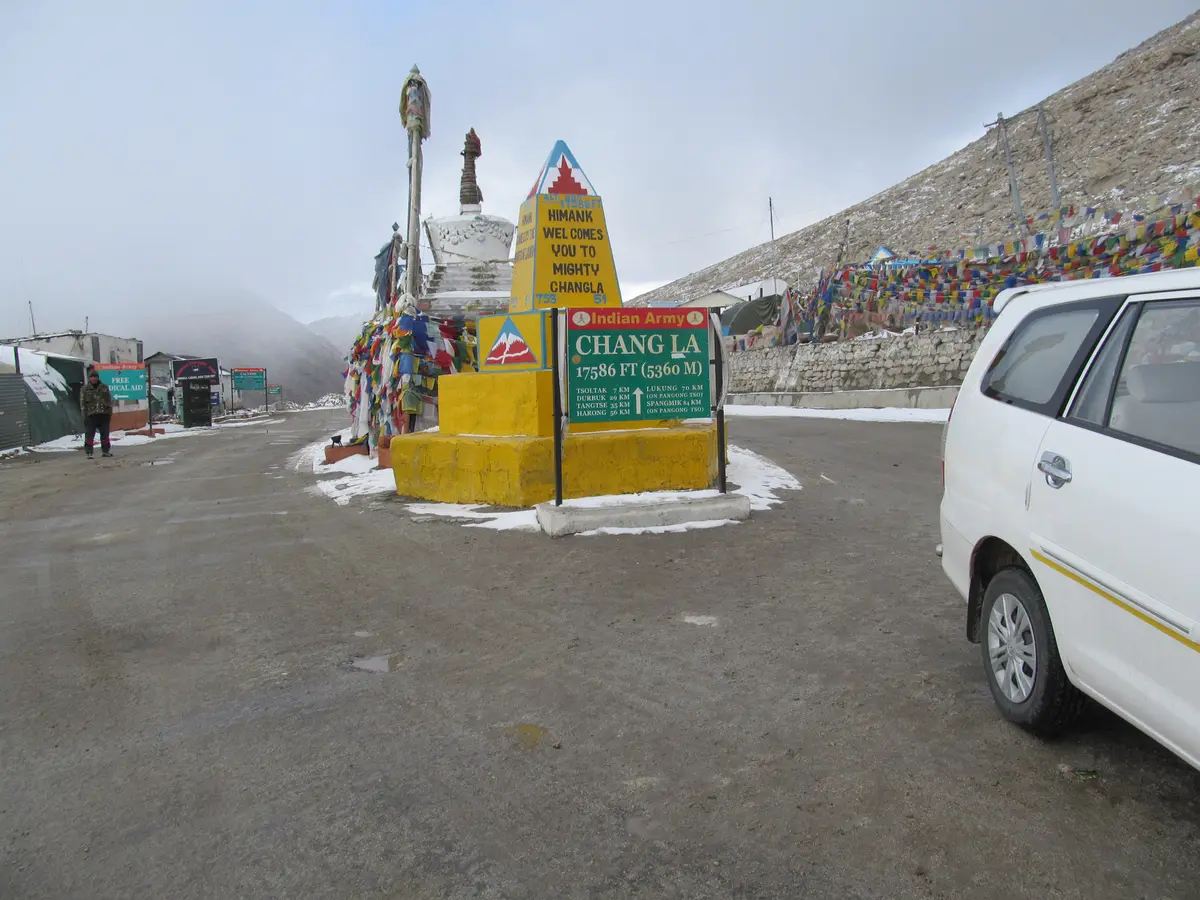
Crossing Chang La
Chang La is the high point of the drive. Like Khardung La, it is cold, windy and short of oxygen at the top, so keep stops brief. The road on either side can be rough in patches and is affected by snowmelt in early summer. The pass is usually given as about 5,360 m (17,590 ft).
Tangtse to Pangong distance
Tangtse is the last sizeable village before the lake and a good place to stretch your legs. From Tangtse, the road follows the valley to Lukung, the first point where you see the lake. It is roughly 30 km, about an hour's drive. Spangmik, where many camps are located, is a few kilometres further along the shore.
Pangong Lake stay: camps, cottages and homestays
Accommodation is spread along the western shore, mainly at Lukung, Spangmik, Man and Merak. Choosing where to stay shapes your experience as much as anything else.
| Area | What it's like | Good for |
|---|---|---|
| Lukung | First view of the lake, many camps and cottages | Shorter drive, easy return to Leh |
| Spangmik | The most popular stretch, with camps and homestays | Classic views, more choice |
| Man and Merak | Further along the shore, quieter | Fewer crowds, travellers heading on towards Chushul |
Facilities are basic compared with Leh. Electricity is often available only in the evening, hot water may be provided by bucket, and mobile coverage is patchy. Most camps operate only in the warmer months and close for winter.
Pangong Lake camping: what to expect
Pangong Lake camping usually means staying in a fixed, furnished tent at an organised campsite rather than pitching your own tent. Most have beds, blankets and an attached bathroom. Wild camping on the lakeshore is discouraged because of the fragile environment and local rules.
- Ask if the tent has heating or an extra blanket; nights are cold even in summer.
- Bring a head torch for night walks to the bathroom block if facilities are shared.
- Carry your rubbish back to Leh. Waste management at the lake is a serious local concern.
Pangong Lake sunrise and photography
If you stay overnight, set an alarm. A Pangong Lake sunrise is cold and quiet, and the first light on the mountains across the water is often the best of the day. Mid-morning, once the sun is high, the lake shows its brightest turquoise and blue bands.
Pangong Lake photography tips
- Timing: sunrise and the hour after give soft light; late morning gives the strongest colours in the water.
- Polariser: a circular polarising filter cuts glare and deepens the blues.
- Batteries: cold drains batteries fast. Keep spares in an inside pocket and charge whenever power is on.
- Night sky: on clear, moonless nights the stars are excellent. A tripod and a wide lens help.
- Drones: this is a sensitive border area. Do not fly a drone without explicit permission.
- Respect: keep to marked paths and do not walk on the marshy breeding areas around the shore.
Pangong Lake itinerary options
One night at Pangong (most popular)
- Day 1: leave Leh early, cross Chang La, lunch at Tangtse, arrive at the lake in the afternoon, sunset on the shore.
- Day 2: sunrise, breakfast, a walk along the shore, then return to Leh.
Pangong as part of a circuit
Instead of driving back to Leh, you can link Pangong with other regions:
- From Nubra: come in from Hunder via the Shyok road, avoiding a return over Khardung La. See Nubra to Pangong via Shyok.
- Towards Hanle: continue south along the shore to Chushul and on to Hanle. See our Pangong to Hanle route guide.
For full Leh-based plans that include the lake, see the 5-day Leh itinerary.
Day trip or overnight?
| Day trip from Leh | Overnight at the lake | |
|---|---|---|
| Time at the lake | A couple of hours around midday | Afternoon, evening and sunrise |
| Driving | Two crossings of Chang La in one day | One crossing per day |
| Light for photos | Harsh midday light | Sunset, night sky and sunrise |
| Altitude | Shorter exposure | A night at the lake's altitude – only if well acclimatised |
For most travellers the overnight option is the better experience. A day trip makes sense only if someone in your group is sensitive to altitude and you still want to see the lake.
Things to do at Pangong beyond photographs
- Walk the shore: early morning walks along established paths near Spangmik are quiet and peaceful.
- Visit Man and Merak: the villages further along the shore give a sense of everyday life on the lake.
- Birdwatching: in summer, look for bar-headed geese and brown-headed gulls around the marshy inlets. Keep your distance from nests.
- Stargazing: on clear, moonless nights the sky above the lake is full of stars.
- Simply sit: many visitors say the best moment was watching the colours change with a cup of tea.
Responsible travel at Pangong
Pangong's popularity puts pressure on a fragile environment. Waste, vehicles on the shore and noise all have an impact.
- Carry your rubbish – including plastic bottles and wrappers – back to Leh.
- Never drive vehicles or ride bikes onto the shoreline or into the water.
- Use refillable bottles and refill stations where available.
- Keep music and voices low, especially at night and around wildlife.
- Choose stays that manage waste and water responsibly.
Pangong Lake bike trip tips
A Pangong Lake bike trip from Leh is a full day's ride with a high pass in the middle. Riders often enjoy it more than the Khardung La run because of the long descent through Tangtse.
- Fill up fully in Leh or Karu.
- Expect water crossings and loose gravel near Chang La, especially in June and early July.
- Leave the lake with plenty of daylight; avoid riding the pass after dark.
- Carry a puncture kit and basic tools; help can be far away on this route.
Permits and practical tips
- Permits: Pangong is in a protected area and permits or registration are checked on the way. Read our Leh permit guide before you go.
- Altitude: do not visit Pangong on your first or second day in Leh. If you feel unwell at the lake, tell your host or driver and descend if symptoms worsen.
- Cash: carry enough cash; digital payments are not always reliable.
- Clothing: thermal layers, a down jacket, a warm hat, sunglasses and high-SPF sunscreen.
Pangong or Tso Moriri?
If you only have time for one lake, Pangong is easier to reach and better served. If you prefer solitude and wildlife, and have more days, Tso Moriri is the quieter choice. Our Tso Moriri travel guide compares the two.
Booking a Pangong Lake tour or package
Most Pangong Lake package options are part of a wider Leh trip. When comparing a Pangong Lake tour, check how many nights are spent in Leh before the lake, whether you stay overnight or return the same day, and which shore area the stay is in.
Tripsdoc's Leh Ladakh packages show current itineraries; the Leh Ladakh 7 Days Package page lists its route and inclusions in detail.
Final thoughts
Pangong rewards a slow visit. Arrive acclimatised, stay the night, get up for sunrise and leave the lakeshore as you found it. If you would like help building Pangong into your Ladakh plan, talk to the Tripsdoc team.
Photo credits (Wikimedia Commons): Apthomas1 (CC BY-SA 4.0), Anirvan Shukla (CC BY-SA 3.0), Always urs0509 (CC BY-SA 4.0).
Frequently Asked Questions
It is possible but tiring: you spend most of the day in the vehicle and cross Chang La twice. An overnight stay gives you the evening light and sunrise, and a gentler pace at altitude.
Yes. Even in summer, night temperatures at the lake can drop close to freezing, and wind makes it feel colder. Pack a down jacket, thermals, a warm hat and gloves even for a July trip.
Pangong is easier to reach and has more accommodation, so it suits most first trips. Tso Moriri is quieter and more remote. Our Tso Moriri guide compares the two in detail.
Some travellers visit in winter when the lake freezes, but most camps are closed, temperatures are far below freezing and road conditions can change quickly. Treat it as a specialist trip and check current access first.